
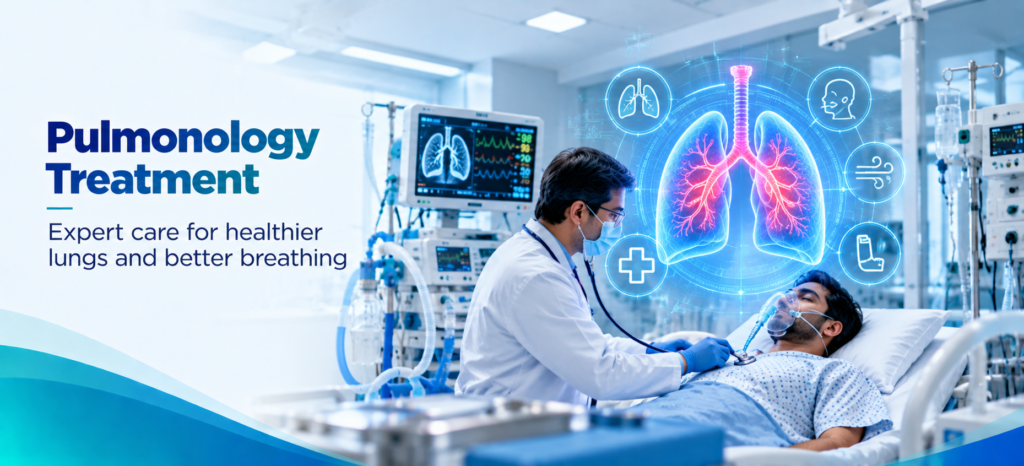
What is Pulmonolgy?
Pulmonology is the branch of medicine that deals with diseases and problems related to the lungs and respiratory system. It includes the lungs, airways, and other parts that help us breathe. Doctors who specialise in this field are called Pulmonologists.
Pulmonology treatment in India includes diagnosis, treatment, and long-term management of different lung and breathing problems. Pulmonologists use various types of tests and treatments to understand the condition and help patients to lead a better life by maintaining their lungs and respiratory system.
Common Respiratory Conditions and Lung Diseases
Some of the common respiratory conditions treated by pulmonologists include:
- Asthma: Asthma causes swelling and narrowing of the airways. It can lead to coughing, wheezing, chest tightness, and difficulty in breathing. Medicines, especially inhalers, can help control the symptoms.
- Chronic Obstructive Pulmonary Disease (COPD): COPD includes conditions such as emphysema and chronic bronchitis. It makes breathing difficult and is commonly linked to smoking. Some of the common treatment may include medicines, oxygen therapy, and lifestyle changes.
- Lung Cancer: Lung cancer may not be detected early but can affect different parts of the lungs and may become serious if not treated early. Treatment can include surgery, radiation therapy, chemotherapy, or targeted therapy.
- Interstitial Lung Diseases: These conditions cause inflammation and scarring in the lung tissue, making it harder to breathe. Examples include pulmonary fibrosis, sarcoidosis, and hypersensitivity pneumonitis.
- Respiratory Infections: Pneumonia, bronchitis, and influenza are some infections that can affect the respiratory system. Treatment may include antibiotics, antiviral medicines, and supportive care.
- Sleep-Disordered Breathing: Conditions such as sleep apnea can affect breathing while sleeping. Treatment may include devices such as a CPAP machine.
Pulmonary Function Tests and Their Types
Pulmonary Function Tests (PFTs) help doctors understand how well the lungs are working. These tests can help diagnose and monitor different lung conditions.
Some commonly used PFTs include:
- Spirometry: It checks how much air a person can breathe in and out and how quickly they can breathe out.
- Cardiopulmonary Exercise Test: This test checks how the heart, lungs, and muscles are responding when a person is physically active.
- Bronchial Provocation Test: It checks how the airways react to certain triggers and can help in diagnosing asthma.
- Exhaled Nitric Oxide Test: It measures nitric oxide in the breath and can help identify inflammation in the airways.
- Pulse Oximetry: It checks the oxygen level in the blood and can help identify problems affecting oxygen levels.
- Diffusion Capacity Test: It checks how well the lungs move oxygen from the air into the blood.
Pulmonology Treatments and Management
The Pulmonology Treatment in India depends on the type and severity of the lung condition. A pulmonologist may suggest one or more of the following treatments:
Medications
Inhaled medicines such as bronchodilators and corticosteroids are commonly used for asthma and COPD. They help open the airways and reduce inflammation. Other medicines may also be prescribed depending on the condition.
Oxygen Therapy
Some lung diseases can lower the oxygen level in the blood. In such cases, the doctor may suggest oxygen therapy. It can be given through portable devices or oxygen systems used at home.
Pulmonary Rehabilitation
Pulmonary rehabilitation may include exercise, education, and nutritional counselling. It can help people with chronic lung diseases improve their ability to exercise and manage their condition better.
Surgical Treatment
Some serious lung conditions may require surgery. Depending on the condition, this may include lung transplantation or lung volume reduction surgery for certain cases of COPD.
Lifestyle Changes
Healthy lifestyle habits can also help manage lung conditions. Quitting smoking, maintaining a healthy weight, and staying physically active can support better respiratory health.
Why Choose Pulmonology Treatment in India?
Pulmonology treatment in India is available at many hospitals with experienced pulmonologists in India and modern diagnostic facilities. Patients can get access to different tests and treatment options under one roof. The treatment plan is selected according to the patient’s condition and needs.
Top Pulmonology Hospitals in India provide the most advanced technologies, with updated skilled specialists and modern diagnostic machines. This helps to diagnose the condition and treat them with better monitoring.
Conclusion
Pulmonology treatment in India helps diagnose and treat different diseases related to the lungs and respiratory system. From asthma and COPD to lung infections and other serious conditions, early diagnosis can help in better management. With the right treatment, medicines, lifestyle changes, and regular follow-up, many lung conditions can be managed effectively.