
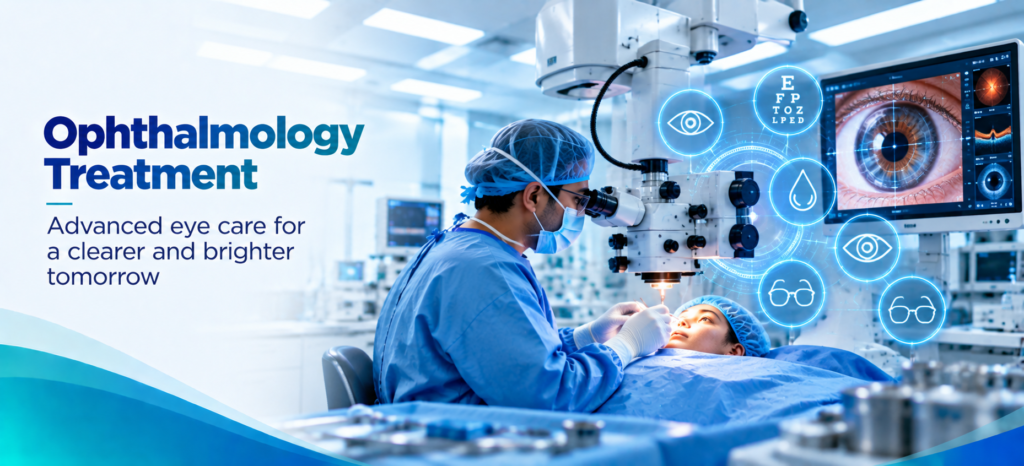
What Is Ophthalmology Treatment?
Ophthalmology is a branch of medicine that deals with the eyes and problems related to vision. The eyes are one of the most important parts of the body because they help us see and perform our daily activities.
Eye problems are becoming more common with increasing age, long hours of screen use, and health conditions such as diabetes and high blood pressure. However, vision problems are not limited to older people. Children, young adults, and people of any age can also develop eye-related problems.
Ophthalmology treatment in India is available for a wide range of eye conditions, from normal eye check ups for short-sightedness to more serious diseases such as glaucoma, cataracts, and retinal disorders.
Understanding Ophthalmology and Its Role
Ophthalmology leads to the health of the eyes and the parts connected with the visual system. An ophthalmologist is a doctor who is specialized to diagnose and treat eye diseases. They can also perform eye surgeries and recommend glasses or contact lenses when required.
An ophthalmologist is a doctor who treats different types of eye problems, including refractive errors, infections, eye injuries, genetic conditions, and eye problems caused by diseases such as diabetes and high blood pressure.
Modern eye care also uses advanced tests such as retinal imaging, Optical Coherence Tomography (OCT), and corneal topography. These diagnostic tests help doctors for a clearer picture of the eye and can pick out certain and specific problems at an early stage. Ophthalmologists may also work with optometrists and opticians.
Common Eye Diseases Treated by Ophthalmologists
There are many conditions that can affect the eyes. Some can be treated easily, while some need regular treatment.
Refractive Errors
Refractive errors affect the way the eye focuses light and can make things look unclear.
- Myopia: Difficulty seeing objects that are far away.
- Hyperopia: Difficulty seeing objects that are close.
- Astigmatism: An irregularly shaped cornea can cause blurred or distorted vision.
- Presbyopia: Difficulty focusing on nearby objects, mainly due to ageing.
Cataract
A cataract occurs when the natural lens of the eye becomes cloudy. It can cause blurred vision, sensitivity to light, and difficulty seeing clearly.
Cataracts are more common in older people, but they can also develop because of an injury, certain medicines, or congenital factors. Cataract surgery in India is one of the most commonly performed eye surgeries and has a high success rate.
Glaucoma
Glaucoma is a group of eye diseases that can damage the optic nerve. In many cases, increased pressure inside the eye can lead to this damage. If glaucoma is not treated, it can cause permanent loss of vision.
Different types of glaucoma include open-angle glaucoma, angle-closure glaucoma, and congenital glaucoma.
Macular Degeneration
The macula is the central part of the retina, age-related macular degeneration can affect the macula.
Conjunctivitis
Conjunctivitis, commonly called pink eye, is an infection or inflammation of the conjunctiva. It can be caused by viruses or other germs and may cause redness, itching, and discharge from the eye.
Squint
A squint, medically known as strabismus, occurs when both eyes do not point in the same direction. It is commonly seen in children.
Common Signs of Eye Problems
Eye diseases can cause different symptoms.
Common symptoms include:
- Blurred or distorted vision
- Eye pain
- Red or bloodshot eyes
- Sensitivity to light
- Double vision
- Loss of side or peripheral vision
- Sudden loss of vision
- Dry or gritty feeling in the eyes
- Burning or itching
- Eye discharge
- Headaches around the eyes
Blurred or distorted vision can develop with conditions such as macular degeneration and diabetic retinopathy.
Severe eye pain, particularly when accompanied by nausea or vomiting, may occur in some types of glaucoma.
Redness, itching, and discharge can be seen in conditions such as conjunctivitis.
Long hours in front of a computer or other screens can also lead to dry, irritated, or burning eyes.
Sudden loss of vision, especially in one eye, should be treated as a medical emergency. It can occur due to conditions such as retinal detachment, an eye stroke, optic nerve problems, or acute glaucoma.
Why is Early Eye Treatment Important?
Some eye diseases do not show clear symptoms in the beginning. By the time a person notices a change in vision, the disease may have already caused damage.
Helps Protect Vision
Early diagnosis of conditions such as glaucoma and macular degeneration can help doctors start treatment before the problem becomes more serious.
Better Recovery
Conditions such as cataracts and refractive errors can often be treated effectively with the right surgery, glasses, or contact lenses.
May Reduce Treatment Costs
Finding a problem early can sometimes prevent the need for more complicated treatment later..
Helps Find Other Health Problems
An eye examination can sometimes show signs of other health conditions such as diabetes and high blood pressure.
Advanced Eye Diagnosis and Treatment Eye Treatment in India provides eye care services with a patient-focused approach. Its ophthalmology services include diagnosis and treatment that has modern technology and experienced specialists.
Detailed Eye Tests
Advanced diagnostic equipment such as Optical Coherence Tomography (OCT), retinal imaging, and corneal topography can be used to examine different parts of the eye in detail.
These tests are also helpful for doctors to identify eye conditions at an early stage, including glaucoma, macular degeneration, and diabetic retinopathy.
Why Choose India for Ophthalmology Treatment?
Many patients choose Ophthalmology treatment in India because of experienced eye specialists, modern hospitals, and advanced diagnostic and treatment facilities.
India provides treatment for a wide range of eye conditions, from common vision problems to complex eye diseases. Patients can consult experienced ophthalmologists in India for medical treatment as well as surgical procedures when required.
For international patients, many hospitals also provide services such as medical assistance, visa support, accommodation, airport pickup, and language interpreters.
Conclusion
Eyes play an important role in our everyday life, so even a small change in vision should not always be ignored. Eye problems can affect people of all ages and may range from simple refractive errors to serious conditions such as glaucoma, cataracts, and retinal diseases.
FAQs
What does an ophthalmologist treat?
An ophthalmologist diagnoses and treats different eye problems, including refractive errors, cataracts, glaucoma, eye infections, retinal diseases, and eye injuries. They can also perform eye surgeries when required.
What are the common symptoms of eye problems?
Common symptoms include blurred vision, eye pain, redness, itching, dryness, sensitivity to light, double vision, eye discharge, headaches, and sudden changes in vision.
Can children also develop eye problems?Yes, Eye problems are not limited to older people. Children can also develop conditions such as squint, refractive errors, infections, and other vision problems.
Why are regular eye check-ups important?
Regular eye check-ups can help find certain eye diseases at an early stage. Early treatment can help manage conditions such as glaucoma and macular degeneration before they cause more serious vision problems.
Is Ophthalmology treatment in India available for international patients?Yes, International patients can receive Ophthalmology treatment in India for different eye conditions. Many hospitals also provide services such as visa assistance, accommodation support, airport pickup, and language interpreters.
.