
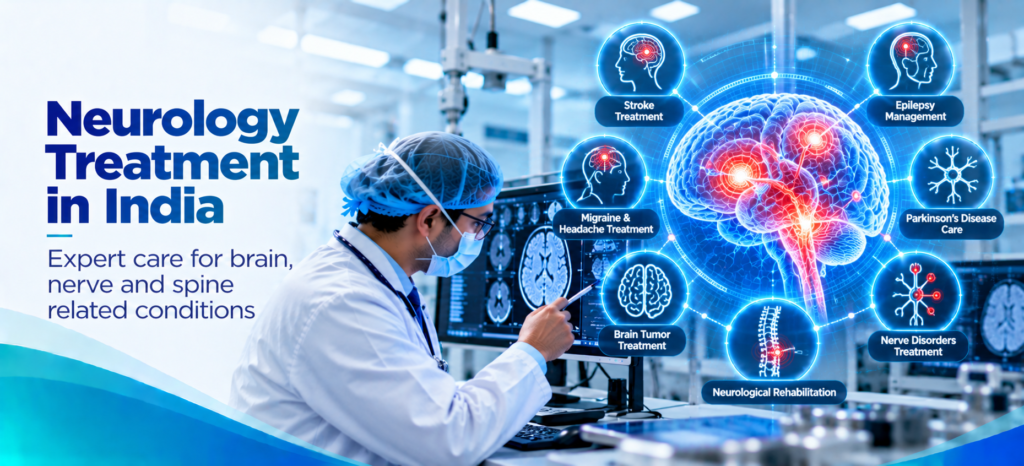
What is Neurology?
Neurology is a field of medicine that deals with diseases and problems related to the brain, spinal cord, and nerves. The nervous system controls different activities of the body such as movement, speech, memory, balance, and coordination.
Neurology treatment in India is available in many hospitals with experienced neurologists and advanced medical facilities. A neurologist is a doctor who diagnoses and treats different disorders related to the nervous system. The treatment can include medicines, therapy, rehabilitation, or other procedures depending on the health condition of the patient.
Neurological problems can affect people of any age. Some problems may develop slowly, while some conditions, such as stroke, can happen suddenly and need immediate medical attention. Therefore, proper diagnosis is important before starting the treatment.
What are the Common Neurological Conditions?
There are many conditions that can affect the brain, spinal cord, and nerves. Some of the common neurological conditions include:
- Migraine and severe headaches
- Epilepsy and seizures
- Stroke
- Parkinson’s disease
- Alzheimer’s disease
- Multiple sclerosis
- Nerve disorders
- Memory-related problems
- Movement disorders
- Sleep disorders
- Brain and spinal cord infections
- Peripheral neuropathy
Migraine
Migraine causes severe pain, usually on one side of the head. Some people may also experience nausea, vomiting, or sensitivity to light and sound.
Epilepsy
Epilepsy is a neurological condition that causes repeated seizures. A seizure happens when there is unusual electrical activity in the brain. It can affect a person’s movement, awareness, or behaviour for a short period.
Stroke
A stroke occurs when the blood supply to a part of the brain gets blocked or a blood vessel in the brain bursts. It can cause sudden weakness, difficulty in speaking, loss of balance, or problems with vision.
Parkinson’s Disease
Parkinson’s disease mainly affects body movement. A person may notice shaking in the hands, stiffness, slow movements, or problems with balance.
Alzheimer’s Disease
Alzheimer’s disease mainly affects memory and thinking. In the beginning, a person may forget recent conversations, names, or daily tasks. As the disease progresses, it can become difficult for the person to perform normal activities without help.
Peripheral Neuropathy
Peripheral neuropathy affects the nerves outside the brain and spinal cord. It can cause tingling, numbness, burning pain, or weakness, especially in the hands and feet. Diabetes is one of the common causes of peripheral neuropathy.
Common Signs of Neurological Problems :
Neurological problems can show different symptoms. Sometimes the symptoms may be mild in the beginning and become more noticeable over time.
Some common signs include:
- Frequent or severe headaches
- Dizziness
- Numbness or tingling
- Muscle weakness
- Shaking or tremors
- Memory problems
- Difficulty speaking
- Blurred or double vision
- Seizures
- Difficulty walking
- Loss of balance
- Problems with coordination
Sudden weakness in the face, arm, or leg, difficulty speaking, or sudden loss of vision can be a sign.
How are Neurological Problems Diagnosed in India?
A physical examination is performed to check movement, reflexes, balance, memory, and coordination.
Depending on the symptoms, the doctor advised to get some tests done that includes:.
- MRI Scan
- CT Scan
- EEG
- Nerve Conduction Study
Common Neurology Treatments in India
The treatment is planned after identifying the cause of the neurological problem. Not every patient needs surgery.
- Medicines
- Physiotherapy
- Speech Therapy
- Rehabilitation
Risks of Neurological Conditions :
Some possible complications include:
- Weakness or paralysis
- Problems with walking
- Memory loss
- Speech problems
- Loss of balance
- Changes in vision
- Difficulty with coordination
- Problems in performing daily activities
Timely treatment can help manage many neurological conditions and may reduce the risk of further complications.
Why Choose India for Neurology Treatment?
Many patients from different countries choose Neurology treatment in India because of experienced doctors, modern hospitals, and affordable treatment options.
Some reasons to choose Neurology hospitals in India include:
- Experienced and skilled neurologists.
- Modern diagnostic facilities such as MRI, CT scan, and EEG.
- Rehabilitation and therapy facilities are also available.
- Treatment costs are generally lower compared to many Western countries.
- Treatment plans are prepared according to the patient’s condition.
- International patients can get services such as visa assistance, airport pickup, accommodation support, and language interpreters.
The best neurology hospitals in India provide diagnosis, treatment, rehabilitation, and follow-up care.
FAQs
What does a neurologist treat?
A neurologist treats diseases related to the brain, spinal cord, and nerves. Common conditions include migraine, epilepsy, stroke, Parkinson’s disease, and different nerve disorders.
What are the common signs of a neurological problem?
Common signs include severe headaches, dizziness, numbness, muscle weakness, tremors, memory problems, seizures, difficulty speaking, and problems with balance or walking.
What tests are done for neurological problems?
Depending on the symptoms, the doctor may recommend an MRI, CT scan, EEG, blood tests, or nerve conduction study to find the cause of the problem.
Is Neurology treatment in India affordable?
Yes, Neurology treatment in India is generally more affordable than treatment in many Western countries.
Why do international patients choose India for neurology treatment?
International patients choose India because of experienced neurologists, modern diagnostic facilities, advanced treatment options, affordable costs, and support services such as visa assistance, accommodation, and airport pickup.