
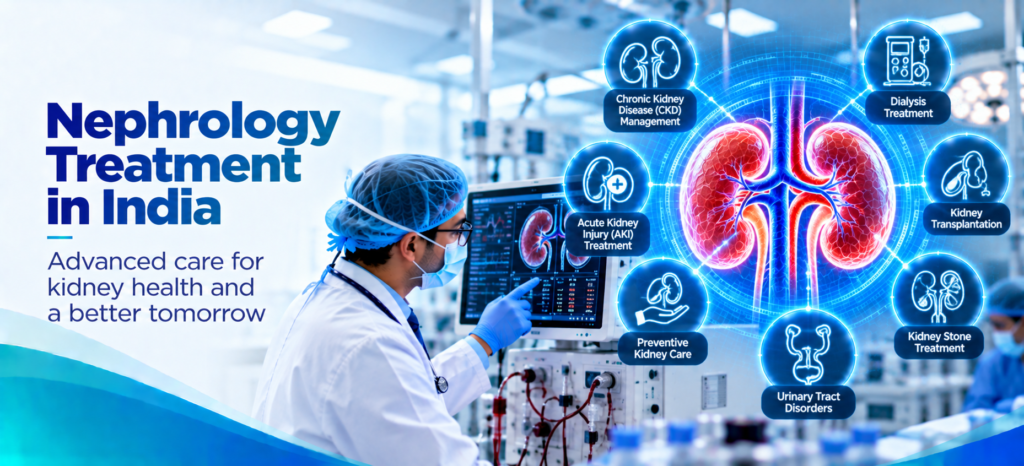
Nephrology: Symptoms, Kidney Diseases & Treatment in India :
Nephrology treatment in India focuses on protecting kidney function, treating kidney diseases, and improving a patient’s overall health.
Nephrology is a branch of medicine that deals with the diagnosis, treatment, and prevention of kidney diseases. A Nephrologist is a doctor who treats kidney-related problems. In our textbooks, we have learnt about the shape and use of the kidney, and why it is so important for the body. Basically, kidneys are two bean-shaped organs that filter waste, remove unnecessary fluid from the blood, and produce urine. The very important and basic function of the kidney is to control blood pressure, balance minerals like sodium and potassium, support healthy bones, and develop the hormones that help to produce red blood cells.
When the kidneys do not work properly, waste and excess fluid build up in the body, which can lead to serious health problems.
Some common causes of kidney disease include:
- Diabetes
- High blood pressure
- Obesity
- Dehydration
- Unhealthy diet
- Kidney infections
- Long-term use of certain medicines
- Family history of kidney disease
- Autoimmune disorders
- Congenital (birth-related) kidney problems
Today, kidney treatment in India is well known for its advanced medical facilities, experienced nephrologists, and affordable treatment options, making it a preferred destination for patients from around the world.
Role of Kidneys in the Human Body
Kidneys are small in size but have a larger impact on the body as they perform various functions due to which the body responds in better form and keeps the body fit and healthy. The basics of it make the best of it as it cleans the blood by removing waste products and extra water that are passed out as urine from the body.
Healthy kidneys also:
- Maintain the body’s fluid balance
- Control blood pressure
- Balance important minerals and electrolytes
- Support healthy bones
- Help produce red blood cells
If the kidneys stop working properly, waste starts building up in the body. This can cause swelling, weakness, high blood pressure, breathing problems, and other serious complications. Early diagnosis and treatment can help protect kidney function and prevent further damage.
Common Kidney Disorders :
A nephrologist treats many different kidney conditions. Some of the most common kidney diseases include:
- Chronic Kidney Disease (CKD): A long-term condition where the kidneys gradually lose their ability to filter waste.
- Acute Kidney Injury (AKI): A sudden loss of kidney function caused by dehydration, infection, severe illness, or certain medications.
- Kidney Stones: Hard deposits of minerals that form inside the kidneys and may cause severe pain while passing through the urinary tract.
- Glomerulonephritis: Inflammation of the kidney’s filtering units, affecting its ability to remove waste.
- Polycystic Kidney Disease (PKD): An inherited condition in which multiple cysts develop inside the kidneys.
- Nephrotic Syndrome: A disorder that causes excessive protein loss through urine.
- Diabetic Kidney Disease: Kidney damage caused by uncontrolled diabetes.
- Hypertensive Kidney Disease: Kidney damage due to long-term high blood pressure.
- End-Stage Kidney Disease (ESKD): The final stage of kidney failure that may require dialysis or a kidney transplant.
Symptoms of Kidney Disease :
Some of the kidney diseases are difficult to detect at an early stage as it may not cause symptoms in the early stages. As the disease progresses, some warning signs may appear.
Common symptoms of Kidney Disease include:
- Swelling in the feet, ankles, hands, or face
- Feeling tired or weak
- Changes in urine colour or frequency
- Blood or foam in the urine
- Loss of appetite
- Nausea or vomiting
- High blood pressure
- Shortness of breath
- Muscle cramps
- Difficulty sleeping
If you notice these symptoms, consult a kidney specialist as early treatment can help prevent permanent kidney damage.
Diagnosis of Kidney Diseases :
To understand how well the kidneys are working, a nephrologist may recommend several tests, including:
- Blood tests
- Urine tests
- Kidney ultrasound
- CT scan
- MRI scan
- Kidney biopsy
These tests help identify the exact cause of the problem and allow doctors to plan the most suitable kidney disease treatment.
Treatment Options in Nephrology :
The treatment depends on the type and stage of kidney disease.
Medical Management : Many kidney problems can be managed with medicines that control blood pressure, blood sugar, infections, inflammation, and protein loss in urine. Along with medication, doctors also recommend healthy eating, regular exercise, proper hydration, and routine follow-ups to protect kidney function.
Dialysis : When the kidneys are unable to remove waste and extra fluid from the body, dialysis may be needed. It performs the work of damaged kidneys and helps keep the body healthy.
The two main types of dialysis are:
- Hemodialysis
- Peritoneal Dialysis
Kidney Transplant
If the kidneys stop working completely, a kidney transplant may be the best treatment option. During this procedure, the damaged kidney is replaced with a healthy kidney from a suitable donor, helping patients return to a better quality of life.
Surgical Procedures
Some kidney conditions require surgery. Common procedures include:
- Kidney stone removal
- Treatment of urinary tract blockage
- Partial or complete removal of a damaged kidney
- Kidney transplant surgery
These procedures are performed using advanced technology by experienced surgeons to ensure safe and effective treatment.
Risks of Untreated Kidney Disease:
Ignoring kidney problems can lead to serious health complications, such as:
- Kidney failure
- Heart disease
- Severe infections
- Anaemia
- Weak bones
- Fluid build-up in the lungs
Regular check-ups and timely treatment can reduce the risk of these complications and improve long-term health.
Why Choose India for Nephrology Treatment?
India has become one of the leading destinations for kidney treatment because it offers high-quality healthcare at affordable costs.
Some key benefits include:
- Experienced nephrologists and kidney transplant surgeons
- Advanced dialysis and transplant facilities
- Modern diagnostic technology
- Internationally accredited hospitals
- Affordable treatment packages
- Comprehensive care under one roof
- International patient services, including visa assistance, accommodation support, language interpreters, and airport pick-up and drop-off
Conclusion
Healthy kidneys are essential for maintaining your overall health. They remove waste, balance fluids, and support many important body functions. Kidney diseases often develop without noticeable symptoms, making early diagnosis extremely important. With timely medical care, healthy lifestyle changes, and regular follow-ups, many kidney conditions can be managed successfully.
If you experience any signs of kidney disease, consult an experienced nephrologist without delay. Early treatment can help protect your kidneys and improve your quality of life.
FAQs
What does a nephrologist treat?
Answer. A nephrologist is a kidney specialist who diagnoses and treats kidney diseases, high blood pressure related to the kidneys, kidney failure, electrolyte imbalance, and patients requiring dialysis or kidney transplantation.
What are the early signs of kidney disease?
Early symptoms may include swelling in the legs or face, changes in urination, tiredness, high blood pressure, loss of appetite, and foamy or bloody urine.
When is dialysis required?
Answer. Dialysis is recommended when the kidneys can no longer remove waste and excess fluid effectively. It helps perform the function of damaged kidneys.
Can kidney disease be prevented?
Many kidney diseases can be prevented by controlling diabetes and blood pressure, staying hydrated, eating a balanced diet, avoiding smoking, maintaining a healthy weight, and getting regular health check-ups.
Why is India a popular destination for kidney treatment?
India offers world-class hospitals, experienced nephrologists, advanced medical technology, affordable treatment costs, and excellent care for both domestic and international patients.