
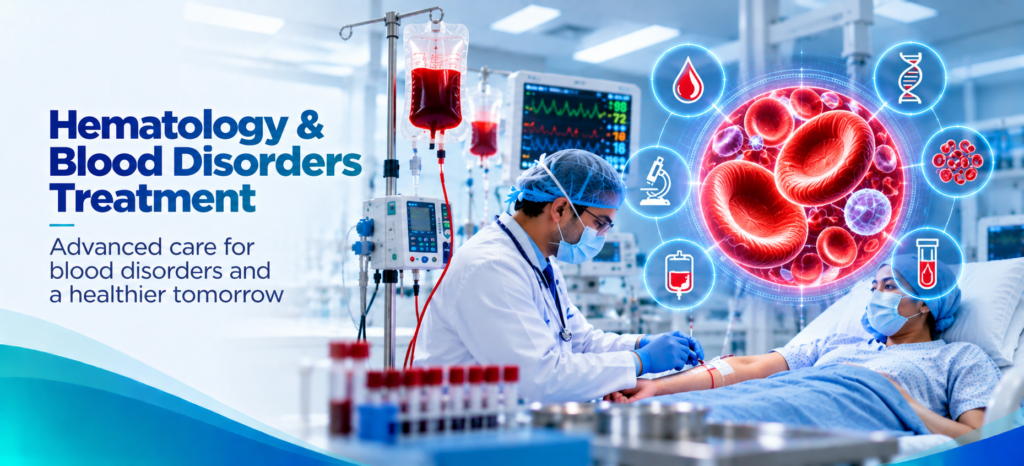
What Are Hematology and Blood Disorders?
Hematology is a medical field that deals with the blood, blood cells, and the organs that make blood. It helps doctors diagnose and treat different blood-related diseases and disorders. Hematology treatment in India is available in many hospitals with experienced hematologists and modern medical facilities.
Blood plays an important role in keeping the body healthy. It carries oxygen to different parts of the body, helps fight infections, and controls bleeding when a person gets injured. Any problem with the blood or blood-forming organs can affect a person’s overall health.
A hematologist in India is a doctor who specialises in finding and treating blood-related problems. Blood disorders can affect people of different ages. Some conditions may be present from birth, while others can develop later in life.
Why is Hematology Treatment Needed?
Some blood disorders can cause mild symptoms, while others may become serious if they are ignored or not treated on time.
Hematology treatment in India may be required for conditions related to red blood cells, white blood cells, platelets, or the body’s blood-clotting process.
Some common reasons for hematology treatment include:
- Low or high blood cell count
- Anaemia
- Blood clotting problems
- Excessive bleeding
- Frequent infections
- Easy bruising
- Blood cancers
- Inherited blood disorders
- Problems with the bone marrow
- Abnormal blood test results
The best hematology hospitals in India provide diagnosis, treatment, monitoring, and follow-up care under one roof.
Common Blood Disorders Treated by Hematologists
There are different types of blood disorders. Some are common, while others require specialised treatment and regular monitoring.
Anaemia : Anaemia is a condition where the body does not have enough healthy red blood cells or haemoglobin. Iron deficiency is one of the common causes of anaemia, but there can be other causes as well.
Thalassemia : Thalassemia is an inherited blood disorder that affects the production of haemoglobin.
Hemophilia
Hemophilia is a blood-clotting disorder in which the blood does not clot properly. A person with hemophilia may bleed for a longer time after an injury.
Leukemia
Leukemia is a type of blood cancer that affects the blood-forming tissues, including the bone marrow. It causes abnormal blood cells to grow rapidly. Treatment may include medicines, chemotherapy, targeted treatment, or stem cell transplantation.
Lymphoma
Lymphoma is a type of cancer that affects the lymphatic system. It mainly develops in a type of white blood cell called lymphocytes.
Multiple Myeloma
Multiple myeloma is a type of blood cancer that affects plasma cells in the bone marrow. It can affect the bones, kidneys, and other parts of the body.
Blood Clotting Disorders
Blood clotting disorders can cause the blood to clot too easily or prevent it from clotting properly. Both conditions can cause health problems and may require medicines and regular monitoring.
Sickle Cell Disease
Sickle cell disease is an inherited blood disorder that affects red blood cells. The cells can become hard and have an unusual shape, which may block blood flow and cause pain or other health problems.
Common Signs of Blood Disorders
Blood disorders can show different symptoms depending on the condition.
Some common signs include:
- Constant tiredness or weakness
- Pale skin
- Frequent infections
- Easy bruising
- Frequent or unusual bleeding
- Shortness of breath
- Dizziness
- Fever
- Unexplained weight loss
- Swelling of lymph nodes
- Bone or joint pain
If these symptoms continue or become severe, a doctor may recommend blood tests and other investigations.
How are Blood Disorders Diagnosed?
The first step in treating a blood disorder is finding the exact cause. The doctor may ask about the patient’s symptoms, medical history, and family history.
Some common tests used in hematology diagnosis include:
- Complete Blood Count (CBC)
- Blood Smear Test
- Bone Marrow Test
- Clotting Tests
Common Hematology Treatments
The treatment depends on the type of blood disorder, its severity, the patient’s age, and overall health.
- Medicines
- Blood Transfusion
- Chemotherapy
- Targeted Therapy
- Stem Cell Transplantation
Possible Risks and Complications
The risks depend on the blood disorder and the type of treatment being given.
Possible complications include:
- Infection
- Bleeding
- Blood clots
- Reaction to blood transfusion
- Weakness and tiredness
- Side effects of chemotherapy
- Reduced blood cell count
- Organ-related complications
Why Choose India for Hematology Treatment?
Many patients from different countries choose Hematology treatment in India because of experienced specialists, modern hospitals, and affordable treatment options. India has several hospitals with dedicated hematology and oncology departments for treating different blood disorders.
Some reasons to choose hematology hospitals in India include:
- Experienced and skilled hematologists.
- Modern laboratories and advanced diagnostic facilities.
- Treatment options for both common and complex blood disorders.
- Advanced facilities for blood cancer treatment and stem cell transplantation.
- Affordable treatment compared to many Western countries.
- Personalised treatment plans based on the patient’s condition.
- International patient services such as visa assistance, accommodation support, airport pickup, and language interpreters.
Conclusion
Hematology plays an important role in diagnosing and treating diseases related to blood and blood-forming organs. Conditions such as anaemia, thalassemia, hemophilia, leukemia, lymphoma, and other blood disorders may require proper medical care and regular monitoring.
Early diagnosis can help doctors start treatment at the right time. With experienced hematologists, modern diagnostic facilities, and advanced treatment options, Hematology treatment in India can provide quality care for patients with different blood-related conditions.
FAQs
What does a hematologist treat?
A hematologist treats diseases related to blood, blood cells, bone marrow, and blood clotting. They also treat conditions such as anaemia, thalassemia, hemophilia, leukemia, and lymphoma.
When should I see a hematologist?
You may need to see a hematologist if you have unexplained tiredness, frequent infections, unusual bleeding, easy bruising, abnormal blood test results, or other symptoms related to blood disorders.
What tests are used to diagnose blood disorders?
Common tests include a complete blood count, blood smear test, clotting tests, and sometimes a bone marrow test. The doctor decides which tests are needed based on the patient’s condition.
Is Hematology treatment in India affordable?
Yes, Hematology treatment in India is generally more affordable than treatment in many Western countries. Patients can also find modern hospitals and experienced specialists for different blood disorders.
Why do international patients choose India for hematology treatment?
International patients choose India because of experienced hematologists, modern diagnostic and treatment facilities, advanced blood cancer care, affordable treatment, and support services for international patients.