
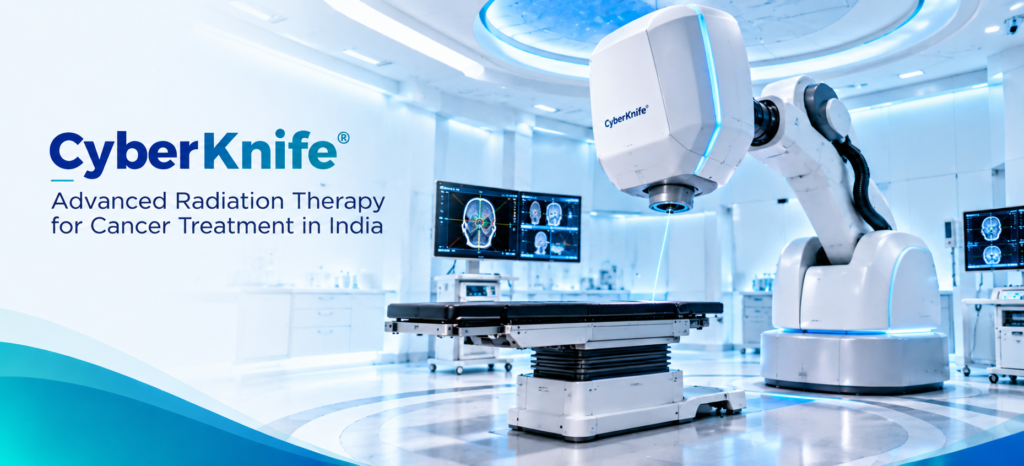
What is CyberKnife?
CyberKnife is a non-invasive procedure that is completely Robotics Radiosurgery that focuses to deliver precise radiation therapy to tumors and other unwanted/abnormal growth in the body. This procedure helps in faster recovery as it is non-invasive, unlike traditional surgical procedures that take months to recover and are performed with incisions. CyberKnife works with robotic arms that only target the tumors with a high dose of radiation and do not harm the nearby healthy tissues. This procedure is a great innovation in medical science that helps to treat various cancerous or non-cancerous tumors with high precision. Also, it helps to treat a variety of neurological disorders.
CyberKnife Robotic Radiosurgery in India mainly focuses on destroying tumor cells without damaging surrounding healthy tissues. This procedure is successful through a process known as Stereotactic Radiosurgery (SRS), it mainly delivers only concentrated beams of radiation from different angles. The whole procedure takes one to five sessions; it can depend on the size and location of the tumor.
The CyberKnife Treatment in India works on radiation machines that are connected to a robotic arm. This connection allows the machine to move around the patient and deliver radiation to the exact site of the tumor with high precision. It also uses advanced imaging technology to capture an accurate image that helps to track the tumour’s position and condition during the treatment. This helps to reach the radiation to the exact tumor. This procedure is highly recommended for treating tumors in difficult-to-reach areas or in organs that naturally move while a person breathes, such as the lungs and liver.
When is CyberKnife Robotic Radiosurgery Recommended?
CyberKnife Robotic Radiosurgery is recommended when the patient has specific symptoms or conditions that show the presence of tumors or abnormal growth in the body. Some of the most common reasons that recommend this procedure include:
- Tumors: The CyberKnife Robotic Radiosurgery procedure can be used to treat both cancerous and non-cancerous tumors. It is useful in treating tumors in the brain, spine, lungs, liver, pancreas, and other parts of the body.
- Inoperable Tumors: These are the tumors that cannot be removed easily by surgery, so the CyberKnife can play a major role in treating the patients whose tumors are difficult to reach with traditional surgical methods.
- Recurrence of Cancer: In case the cancer returns or may develop after earlier treatment, CyberKnife may be used to target the remaining tumor cells with accurate precision.
- Pain Management: In some cases, the CyberKnife procedure helps to reduce the pain when the tumor puts pressure on nerves or surrounding tissues. It also helps to save the surrounding tissues from getting damaged.
- Functional Disorders: CyberKnife is also recommended in conditions such as trigeminal neuralgia; this condition causes severe or unbearable pain in the face. This procedure helps to get relief without performing any major surgery.
Steps to Take Before CyberKnife Treatment
There are few steps that have to be taken before the surgery starts. CyberKnife Robotic Radiosurgery has some pre preparation instructions, tests and has to be well prepared with all the details that includes:
Primary consultation: The initial stage is to have a very clear consultation with a radiation oncologist, who will review the patient’s medical history, perform a physical examination, and also make the patients aware about the procedure.
Imaging tests: The doctor advises some imaging tests like MRI or CT scan that helps to get a clear picture of the tumor and also helps to locate the exact position of the tumor.
Blood Tests: Some blood tests are also needed to assess the patient’s complete medical health, this step ensures the doctors about the fitness for the procedure. This test clears the functions of liver and kidney and also it includes the blood counts.
Medical Review: This step needs a clarification of the patients on the complete list of the medication they are currently taking.
Fasting: On the day of procedure, the patient is advised to fast for a certain period of time.
Conditions Treated with CyberKnife Robotic Radiosurgery
Understanding the need for CyberKnife treatment is also a well-analysed procedure, as the doctor considers various aspects before deciding if CyberKnife treatment is required or not.
- Size and location of the tumor: CyberKnife mainly focuses on small or medium-sized tumors; it is required when the tumor is in a place that is difficult to treat with surgery. Tumor sizes that are smaller than 5cm may be an option in some cases.
- Types of Tumors: CyberKnife treatments are useful in treating different types of Tumors such as:
- Brain tumors: Tumors that grow in the brain.
- Spinal tumors: Tumors that develop in or around the spine.
- Lung tumors: Cancer cells that develop in the lung and other abnormal growths in the lungs.
- Liver tumors: Cancer that starts developing in the liver and spreads all over the liver.
- Pancreatic tumors: Tumors that grow in the pancreas.
- Tumors that have spread to the brain: Cancer that develops in the brain and can spread to other parts of the brain.
- Patient Health Issues: CyberKnife can be a good option for the patient who does not wish to opt for regular surgery because of certain reasons, like age or health problems.
- Previous Treatment: In some cases, tumors grow after treatment such as chemotherapy or radiation; CyberKnife may be an option to treat the remaining tumors.
Top Hospitals for CyberKnife Treatment & Robotic Radiosurgery in India
Limitations of CyberKnife Treatment
CyberKnife Robotic Radiosurgery in India is one of the best treatments to treat tumors or lesions, but there are some limitations that also make the treatment challenging. Some of them include:
- Large-sized Tumor
- Location of the Tumor
- Previous Radiation Therapy
- Previous Medical Ho History
- Pregnancy
- Patients who cannot deal with anxiety or pain or can’t remain still
- Allergic Reactions
- Mental Health Conditions
Complications and Risk of CyberKnife Robotic Radiosurgery
Every silver lining has its cost. The CyberKnife Robotic Radiosurgery comes with some common and rare risks. Not every but some patients have to go through major complications such as:
Common Risks
- Fatigue
- Skin Irritation
- Nausea
- Swelling
Uncommon Risks
- Radiation Necrosis
- Neurological Effects
- Secondary Cancers
- Infection
FAQs
What is CyberKnife?
CyberKnife is a non-invasive procedure that is completely Robotics Radiosurgery that focuses to deliver precise radiation therapy to tumors and other unwanted/abnormal growth in the body.
What tumors can be treated with CyberKnife?
CyberKnife can be used to treat tumors that are difficult to reach with traditional surgery, both cancerous and non-cancerous tumors. It may be used for tumors in the brain, spine, lungs, liver, and pancreas.
How many sessions are needed for CyberKnife treatment?
The whole procedure takes one to five sessions; it can depend on the size and location of the tumor.
When is CyberKnife treatment recommended?CyberKnife may be recommended for inoperable tumors, recurring cancer, certain functional disorders, and tumors that are difficult to reach through regular surgery. It may also help reduce pain caused when a tumor puts pressure on nerves.
Who can be a candidate for CyberKnife treatment?
CyberKnife mainly focuses on small or medium-sized tumors; it is required when the tumor is in a place that is difficult to treat with surgery. Tumor sizes that are smaller than 5cm may be an option in some cases.
Is CyberKnife treatment painful?
No, the cyberknife treatment is not painful. CyberKnife is a non-invasive procedure that is completely Robotics Radiosurgery that focuses on delivering precise radiation therapy to tumors.
What are the side effects of CyberKnife treatment?
Some patients may experience tiredness, nausea, skin irritation, or swelling after CyberKnife treatment. The side effects depend on the area being treated and the patient’s overall health.
How long does it take to recover after CyberKnife treatment?
Recovery after CyberKnife treatment is usually faster because it does not require open surgery. Many patients can return to their daily activities soon after treatment, depending on their health and the area treated.