
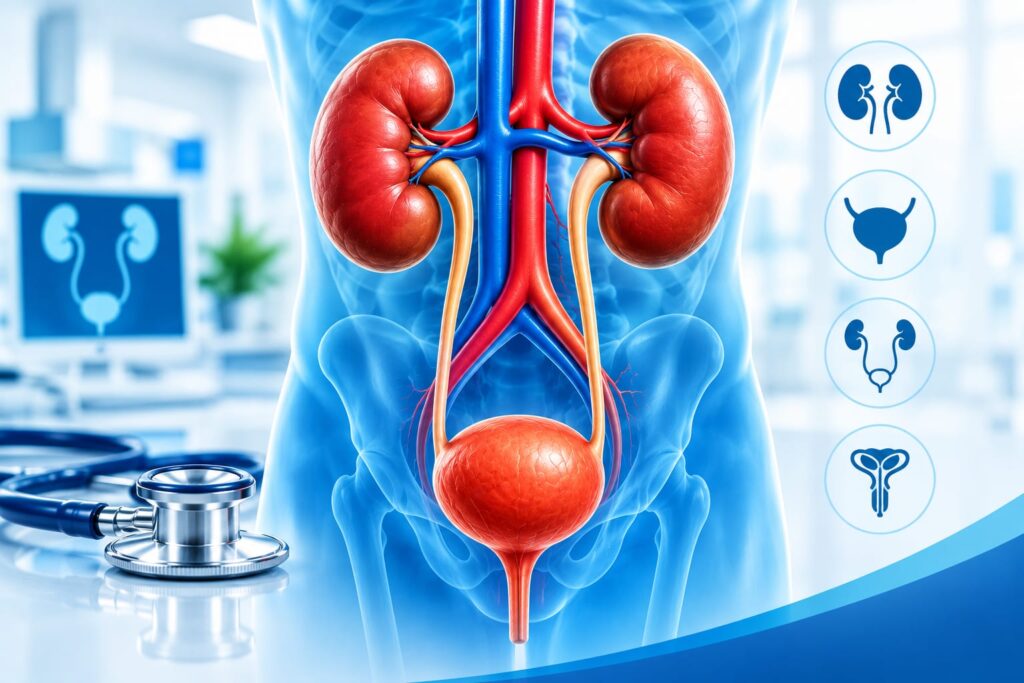
Urology (Urinary Tract and Male Reproductive System)
Urology is a medical field that deals with problems related to the urinary system and male reproductive system. It covers the kidneys, ureters, bladder, urethra, and male reproductive organs. Urology treatment in India includes both medicines and surgical procedures, depending on the patient’s condition.
Urological problems can affect men, women, and children. Common problems include urinary infections, kidney stones, prostate problems, bladder disorders, male infertility, and erectile dysfunction. Urologists in India also work with specialists from other fields when a patient’s condition needs combined care.
What Does Urology Treat?
Urology Hospitals in India provide care along with diagnostic facilities and treatment. Urologists diagnose and treat a wide range of conditions related to the urinary and reproductive systems. Some common problems include:
- Urinary tract infections (UTIs)
- Kidney stones
- Prostate enlargement
- Prostatitis
- Prostate cancer
- Bladder problems
- Bladder cancer
- Urinary incontinence
- Erectile dysfunction
- Male infertility
- Kidney and urinary tract problems
- Urological problems in children
Common Urological Conditions :
Urinary Tract Infections
Urinary tract infections are common, especially in women. They can cause burning while passing urine, frequent urination, and cloudy urine.
Kidney Stones :
Kidney stones are hard stone-like substances that form inside the kidneys. They can cause severe pain in the lower back or side, nausea, and blood in the urine. Small stones may pass naturally, while larger stones may need medical treatment.
Prostate Problems :
Prostate problems are common in men, especially with increasing age. Benign prostatic hyperplasia (BPH) causes the prostate to become enlarged and can make urination difficult. Prostatitis, or inflammation of the prostate, can also cause pain and urinary problems. Prostate cancer is another serious condition that may require regular screening.
Erectile Dysfunction :
Erectile dysfunction means having difficulty in erection or no erection at all. It may sometimes be linked to stress or other emotional factors, but it can also be related to diabetes, heart disease, or low testosterone levels.
Male Infertility :
Male infertility can happen because of a low sperm count, poor sperm quality, or a blockage that affects the movement of sperm.
Bladder Problems :
Bladder problems can include urinary leakage, overactive bladder, and bladder cancer. These problems can affect a person’s daily life and should not be ignored.
Symptoms That Should Not Be Ignored
Some of the common symptoms of urinary and reproductive system that needs medical attention includes :
- Pain or burning while passing urine
- Frequent urination
- Blood in the urine
- Pain in the back or side
- Difficulty starting urination
- Urine leakage
- Testicular swelling or a lump
- Erectile problems
- Repeated urinary infections
These symptoms can happen because of simple conditions, but they can sometimes point to major problems such as kidney disease or cancer. Early treatment can often lead to better results.
How Are Urological Problems Diagnosed?
Top urologists in India may use different tests to understand the cause of the problem. These may include urine tests and blood tests to check for infections, kidney function, or other health problems.
Doctors may also recommend imaging tests such as:
- Ultrasound
- CT scan
- MRI
For male infertility, doctors may recommend semen analysis and hormone tests.
Urology Treatment and Procedures
The treatment depends on the seriousness of the condition. Some problems can be managed with medicines, while others may need a procedure or surgery.
Common treatment options include:
- Antibiotics for infections
- Medicines for prostate or bladder problems
- Hormonal treatment for some reproductive problems
- Laser treatment for kidney stones
- Prostate surgery
- Tumour removal
- Urinary reconstruction
Modern urology treatment in India also includes minimally invasive procedures, laparoscopic surgery, and robotic surgery.
Why Choose Urology Treatment in India?
Urology treatment in India is available at many hospitals with experienced urologists in India, modern diagnostic facilities, and advanced treatment options.
Many hospitals also offer minimally invasive, laparoscopic, and robotic procedures where suitable. For international patients, hospitals may also provide support with appointments, travel arrangements, accommodation, and other treatment-related needs.
Conclusion :
Problems such as urinary infections, kidney stones, prostate issues, infertility, and bladder disorders can affect daily life if they are not treated on time.
An unusual change in urination, pain, swelling, or reproductive health, it is better to speak to a urologist instead of ignoring the symptoms. Early diagnosis and proper urology treatment can help manage the problem and support better long-term health.
FAQs
What does a urologist treat?
A urologist treats problems related to the urinary system and male reproductive system, including kidney stones, urinary infections, prostate problems, bladder disorders, infertility, and erectile dysfunction.
Is urology only for men?
No. Urology is for both men and women. Women can also develop urinary infections, kidney stones, bladder problems, and urinary incontinence.
When should I see a urologist?
You should consider seeing a urologist if you have blood in the urine, painful or frequent urination, difficulty passing urine, urine leakage, repeated infections, testicular swelling, or other unusual urinary symptoms.
What tests are used in urology?
A urologist may recommend urine and blood tests, ultrasound, CT scan, MRI, or cystoscopy. Men with fertility problems may also need semen analysis and hormone tests.
Is urology treatment in India available for international patients?
Yes, Many hospitals in India provide urology treatment for international patients, including diagnosis, medicines, minimally invasive procedures, and surgery depending on the patient’s condition.