
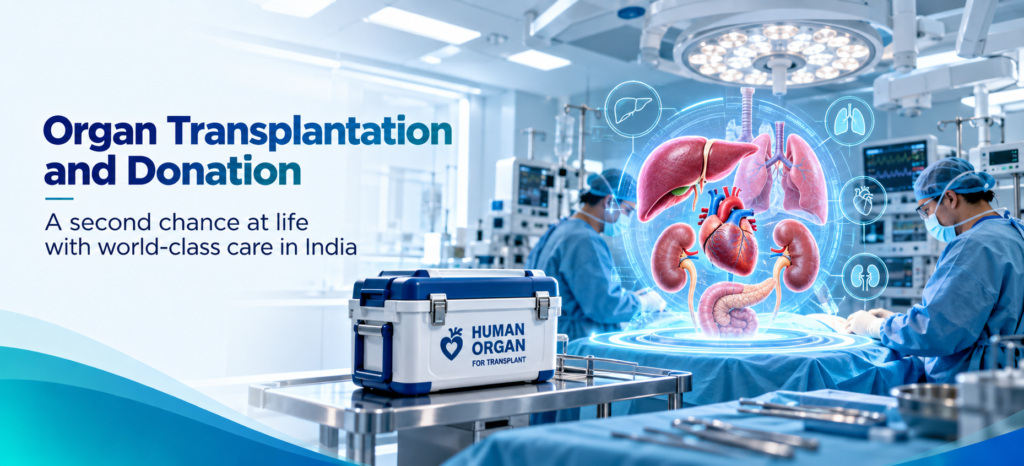
What is Organ Transplantation ?
Organ transplant is a surgical procedure that is performed to remove the healthy organ from the donor and give it to someone who has organ failure. This procedure basically contains two surgeries that are performed at the same time, one is removal of the organ from the donor’s body, and second is transplanting it to the recipient.
Organ transplant is a great invention of medical science that offers a second chance at the lives of people who are suffering from life threatening diseases and injuries to their organs. Organ transplant in India is available with utmost priorities and patients coming from other countries are getting their surgeries with great outcomes.
Types of Organs That Can Be Donated for Transplantation
Organs that you can donate after death are your:
- Liver
- Kidney
- Pancreas
- Heart
- Lungs
- Intestines
- Uterus
Other body tissues that can be donated after death:
- Corneas
- Heart valves
- Bone marrow
- Bone
- Skin
- Tendons and ligaments
- Cartilage
- Blood vessels
- Nerves
Organs and tissues that can be donated while the donor is still alive include:
- One kidney
- A piece of your liver
- Your uterus
- Bone marrow or stem cells
- Part of your lung or pancreas (rare)
Types of Organ Donation
The organ donor is somebody who had died recently and had stepped forward to donate their organs while they were alive. Types of organ donors are:
Deceased donor: This is a dead donor and has organs in healthy conditions. Only healthy organs are donated, in case the donor has certain diseases or infections in their lives, they won’t be recommended to donate the organs. Being an organ donor is a decision that has to be made before death.
Living donor: This donor has to be in good health and has no medical issues that could impact the surgery. Before performing the organ transplant certain tests and diagnosis are reviewed so it could be easy to match the organ or else it won’t work well.
Symptoms of Organ Rejection
Organ rejection can happen at any time or stage after the transplant, even years later. Some of the common symptoms of organ rejection include:
Kidney Transplant Rejection: Low urine result, swelling, weight gain, fever and high blood pressure.
Liver Transplant Rejection: Symptoms may include jaundice, dark urine, fatigue, nausea, and abdominal pain.
Heart Transplant Rejection: Most common failures include shortness of breath, fatigue, weight gain, and swelling in the legs or abdomen.
Lung Transplant Rejection: Symptoms include coughing, shortness of breath, fever and fatigue.
Benefits of Organ Transplant
Life Saving Treatment: One of the most major benefits of organ transplant is that it can save a patient’s life. Patients having organ failure or are at the end – stage of the organ failure, a transplant can be considered as a life saving treatment option.
Improved Life Expectancy: Removing a damaged organ with a healthy organ means a new life has been added to the patient’s life expectancy and it enhances the quality of life. Patients can resume their normal day to day activities, experience reduced symptoms and enjoy their overall health.
Long-Term Survival: Organs transplant is a great medical advancement that not only gives a new life to a person but also organ transplant recipients experience long term survival after the treatment with good health.
Treatment for chronic conditions: Organ Transplant is an effective treatment for severe organ failure conditions like kidney failure, liver cirrhosis, heart failure and more.
Risk and complications of Organ Transplant
As like other treatment procedures, organ transplant has its own risk and complications. Some of the risks include:
Surgical risks: Organ Transplant is a major surgical procedure that carries various risk of complications such as infection, bleeding, and side effects of anesthesia.
Organ Rejection: One of the biggest challenges of Organ Transplant surgery is the possibility of organ rejection. This happens most when the recipients immune system does not accept the organ, taking it for an unwanted intruder
Side effects of Immunosuppressants: Patients must take Immunosuppressants medication for the rest of their life to get prevented from organ rejection. These medications have their own side effects like infection, weight gain and risk of developing certain cancers.
Long life health issues: Some of the patients of organ transplant face health issues for the rest of their life like diabetes, high blood pressure or kidney damage.
FAQs
Which organs can be donated and transplanted?
Organs that can be donated include the kidneys, liver, heart, lungs, pancreas, and intestines. Some organs and tissues can also be donated by living donors, depending on their health and medical suitability.
What is the difference between a living donor and a deceased donor?
A deceased donor is a dead donor and has organs in healthy conditions. Being an organ donor is a decision that has to be made before death. A living donor donates an organ or part of an organ while alive, such as one kidney or part of the liver.
Who can donate an organ for transplantation?
A person may be considered for organ donation if they meet the medical requirements. Before performing the organ transplant certain tests and diagnosis are reviewed so it could be easy to match the organ or else it won’t work well. Deceased donation depends on the person’s medical condition and the suitability of the organs.
What are the benefits of organ transplantation?
Organ transplantation can save lives and improve the quality of life for people with severe organ failure. It may help reduce symptoms, improve daily activities, and increase life expectancy, depending on the patient’s condition and the success of the transplant.
What are the possible risks of organ transplantation?
Possible risks include bleeding, infection, complications from surgery, and organ rejection. Patients usually need medicines called immunosuppressants to prevent their immune system from rejecting the transplanted organ.
How long does it take to recover after an organ transplant?
Recovery after an organ transplant depends on the type of organ transplanted and the patient’s health. Some patients recover within a few weeks, while others may need several months to recover fully. It differs from patient to patient.
Can the body reject a transplanted organ?
Yes, organ rejection can happen when the body’s immune system identifies the transplanted organ as foreign and attacks it. Organ rejection can happen at any time or stage after the transplant, even years later.
Do patients need to take medicines after an organ transplant?
Answer. Yes, most organ transplant patients need to take immunosuppressant medicines to prevent the immune system from rejecting the new organ.