
What is CAR-T Cell Therapy?
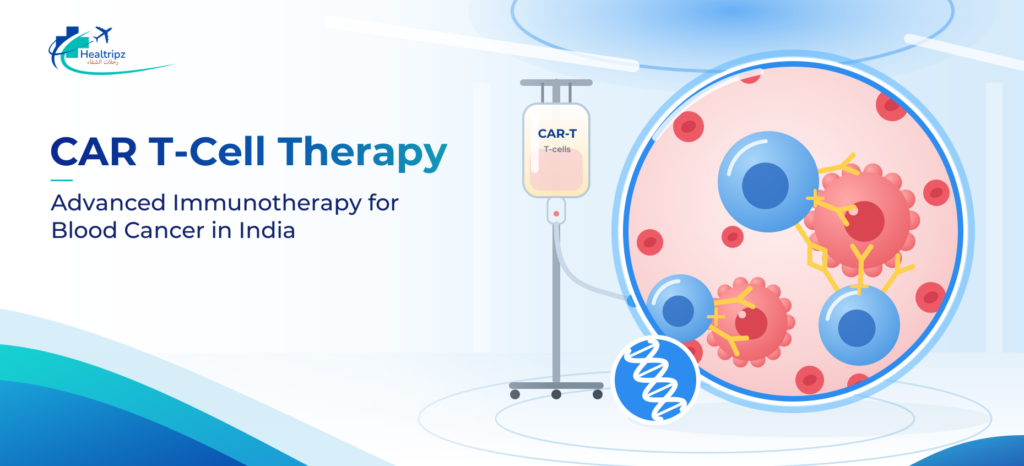
Chimeric Antigen Receptor (CAR) T-cell therapy is a type of immunotherapy that treats some types of blood cancer. It works to power your T lymphocytes (T cells) into more efficient cancer-fighting machines. CAR T-cell therapy helps to develop a new gene into your T cells, these new genes help to change your cells so it can perform better to detect and kill cancerous cells. In a few cases, CAR T-cells therapy has proven effective in curing blood cancer. But not every time.
Conditions treated with CAR T-cells therapy
In today’s growing world, CAR T-cells therapy in India is an alternative option to treat some types of blood cancer when all other treatments fail. Some of the conditions that can be treated with CAR T-cells include:
- B-cell acute lymphoblastic leukemia (ALL).
- Diffuse large B-cell lymphoma.
- Follicular lymphoma.
- High-grade B-cell lymphoma.
- Mantle cell lymphoma
- Multiple myeloma.
- Primary mediastinal large B-cell lymphoma.
Procedure of CAR-T cells therapy
Here is a brief step by step CAR-T cells therapy procedure that helps to understand how it happens before, during or after.
Collection of T cells: The very first stage in this procedure is to collect T cells from the patient’s blood. This process is known as leukapheresis, this procedure separates the T cells and is collected from the patient’s blood.
Genetic Modification: After collecting the T cells, they are sent to a laboratory for examination. T cells are genetically modified to show chimeric Antigen receptors (CARs) on the surface. This step helps to recognise the cancer cells and attack them more effectively.
Expansion of CAR-T cells: After genetic modifications, the CAR-T cells are cultured and expanded in the laboratories. This process is time taking, and can take several days to increase the CAR-T cells.
Pre-Infusion Conditioning: Before infusing the modified CAR T-cells back into the patient’s body, doctors usually use chemotherapy that helps to reduce the number of existing immune cells, and makes a new space for the new CAR T-cells to grow and fight cancer.
Infusion of CAR-T cells: After completing the Conditioning process, the modified cells are kept back into the patient’s blood.
Diagnosing the side effects: After the infusion of CAR-T cells in the patient’s body, the doctor monitors the patient’s condition very closely for the first few days to see any side effects if it happens.Close monitoring is important because some patients may develop side effects like cytokine release syndrome (CRS) or problems related to the nervous system.
How Does CAR T-Cell Therapy Help Fight Cancer?
T-cells are the types of white blood cells that help the immune system fight infections and other harmful cells such as cancer cells. T cells detect the antigens that are unusual cells in the body and identify certain proteins on their surface. T cells usually have their own proteins called receptors. Receptors help to identify the abnormal cells. The T cell works as a protector of healthy cells, when a T cell recognises harmful cells it immediately comes into effect becomes active and starts attacking harmful cells. It indicates and works as a signal for other immune cells to help fight the harmful cells.
T-cells usually detect the cancer cells, but not every single time T-cells can recognise their own. This is the point where CAR T-cells therapy works. In this therapy, samples of the patient’s T cells are collected from the blood and then sent to the laboratory for further diagnosis. There, scientists change the cells by adding a special receptor called a chimeric antigen receptor (CAR). This receptor helps to identify T cells.
The modified cells keep on multiplying that helps to fight for a long term that targets your cancer cells. CAR T-cell therapy is also termed as a “living drug”.
Risk and complications of CAR T-cells therapy
The most common risks that come with therapy are cytokine release syndrome and neurological issues. Cytokine release syndrome is an inflammatory syndrome that causes symptoms such as:
- Dyspnea (shortness of breath)
- Fever
- Low blood pressure
- Heart or lung issues
Some of the neurological issues from CAR T-cells therapy include:
- Aphasia ( problem in speaking)
- Balance issues
- Confusion
- Dysgraphia ( problem in writing)
- Headache
- Seizures
- Tremors or twitching
Some more complications include
- An allergic reaction during infusion
- Fatigue
- Bruising
- Bleeding
- Hypokalemia (low levels of potassium)
- Hyponatremia (low sodium levels)
- Increased risk of infection
Benefits of CAR T-Cells
- This therapy is a new invention in medical science to treat different kinds of blood cancers.
- The therapy is mostly effective in cases where other cancer treatment fails or when the cancer recurs.
- CAR T-cells therapy can be helpful in curing types of blood cancer and also give a new life to the cancer patients to live longer.
Hospitals Offering CAR T-Cell Therapy in India
CAR T-cell therapy is not available at every cancer hospital. It needs a dedicated cell therapy unit, a team that knows how to manage its side effects, and close monitoring after the infusion. If you are looking for CAR T-cell therapy in India, these three hospitals are widely reported to offer it.
Apollo Hospitals
Apollo runs cancer centres in several Indian cities. The group has been reported as the first private hospital group in India to complete a commercial CAR-T programme, in 2024. Not every Apollo centre gives CAR-T, so check which one can treat your condition before you plan travel.
Tata Memorial Hospital, Mumbai
Tata Memorial is one of India’s leading cancer institutes and has played a central role in CAR-T research in the country. NexCAR19, India’s first approved CAR-T therapy, was developed by a company incubated at IIT Bombay and Tata Memorial Hospital.
Amrita Hospitals, Kochi and Faridabad
Amrita Hospitals opened dedicated CAR T-cell therapy centres of excellence in Kochi and Faridabad in 2024. Between them, the two centres serve patients in both the south and the north of India.
FAQs
Which types of cancer can be treated with CAR T-cell therapy?
CAR T-cell therapy is mainly used to treat certain blood cancers, including some types of leukemia, lymphoma, and multiple myeloma. The therapy is mostly effective in cases where other cancer treatment fails or when the cancer recurs.
How does CAR T-cell therapy work?
In this therapy, samples of the patient’s T cells are collected from the blood and then sent to the laboratory for further diagnosis. The modified cells keep on multiplying that helps to fight for a long term that targets your cancer cells.
Is CAR T-cell therapy effective for blood cancer?
This therapy is a new invention in medical science to treat different kinds of blood cancers. The therapy is mostly effective in cases where other cancer treatment fails or when the cancer recurs. However, its effectiveness varies depending on the type of cancer, the patient’s condition, and their response to treatment.
How long does it take to recover after CAR T-cell therapy?
Answer. The recovery time depends on the overall health condition of the patient. It varies from patient to patient and how the treatment responds to the patient’s body. Close monitoring after the treatment is required so it helps to identify the side effects that may develop within days or weeks after the treatment.
Is India a good option for CAR T-cells treatment?
Yes, India is a good and valuable option in terms of medical treatments. It has all the medical facilities available with advanced machines and experienced doctors. Additionally CAR T-cells treatment in India is affordable that many other countries without compromising on the quality of the treatment.
How are T cells collected for CAR T-cell therapy?
In this therapy, samples of the patient’s T cells are collected from the blood and then sent to the laboratory for further diagnosis, where they are modified to help identify and attack cancer cells.
What are the side effects of CAR T-cell therapy?
CAR T-cell therapy may cause fever, low blood pressure, tiredness, confusion, and difficulty speaking. Some patients may also develop serious complications, such as cytokine release syndrome, which requires close medical monitoring.
Is CAR T-cell therapy used when other cancer treatments fail?
Yes, CAR T-cell therapy may be recommended for certain blood cancers that return after treatment or do not respond to other treatments. However, its suitability depends on the type of cancer and the patient’s overall health.