
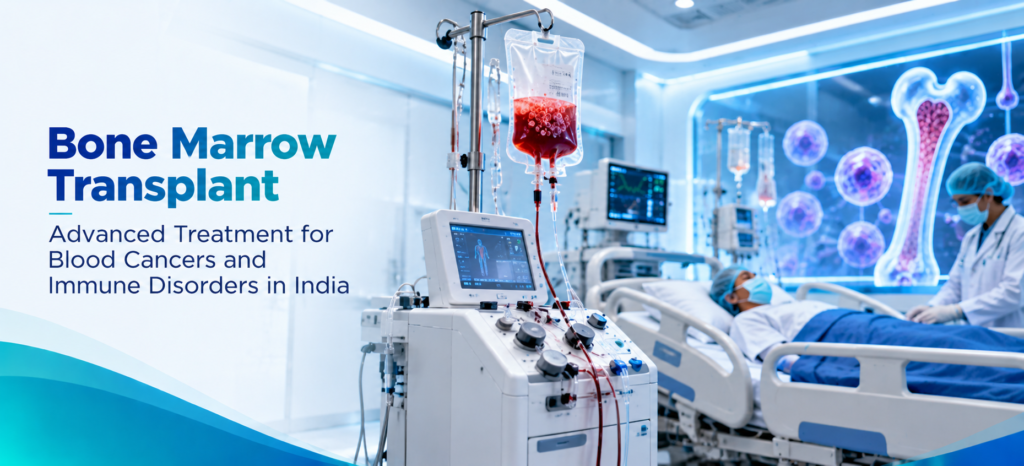
What is Bone Marrow Transplant ?
Bone Marrow Transplant is a treatment that performs to develop healthy blood forming stem cells, it is given to a patient to replace bone marrow that is incapable of producing enough healthy blood cells. A bone marrow transplant is also known as a stem cell transplant or a hematopoietic stem cells transplant.
Top Bone Marrow Transplant Surgeons in India perform the surgery with better precision and patient centric approach. Doctors recommended bone marrow transplant only when the present bone marrow in the body stops producing enough healthy blood cells or even when it completely stops working. The Bone Marrow Transplant in India is performed under experienced doctors who are excellent at their field of treating cancers like leukemia.
The transplant can be performed with patients own stem cells or sometimes it needs a donor.
As this transplant can sometimes take long recovery time, and patients may face complications during the treatment.
Conditions Treated with a Bone Marrow Transplant in India
Conditions that can be treated with Bone marrow transplants include both cancerous and noncancerous diseases, including:
- Acute lymphocytic leukemia.
- Acute myelogenous leukemia.
- Adrenoleukodystrophy.
- Aplastic anemia.
- Bone marrow failure syndromes.
- Chronic lymphocytic leukemia.
- Chronic myelogenous leukemia.
- Diffuse large B-cell lymphoma.
- Hemoglobinopathies.
- Hodgkin lymphoma.
- Immune deficiencies.
- Inborn errors of metabolism.
- Mantle cell lymphoma.
- Multiple myeloma.
- Myelodysplastic syndromes.
- Neuroblastoma.
- Non-Hodgkin’s lymphoma.
- Plasma cell disorders.
- POEMS syndrome.
- Primary amyloidosis.
- Sickle cell anemia.
- T-cell lymphoma.
Why is the Bone Marrow Transplant Done?
Bone marrow transplant in India is performed to benefit the patients suffering from cancerous or non cancerous disease. Some of the reasons to undergo bone marrow transplant treatment includes:
- Helps patients in replacing or rescuing the damaged bone marrow during a high dose of chemotherapy or radiation therapy.
- Replaced damaged or poorly functioning bone marrow with new stem cells.
- Provides new stem cells that help to destroy cancer cells.
Risks and Complications
There are several risks and uncertainties that can occur during the treatment. It completely depends upon the health condition of the patients. Some of the patients face minimal issues with a bone marrow transplant, and in some cases serious complications can be life threatening.
Some of the possible risks of bone marrow transplant include:
- Graft-versus-host disease, this is a complication of allogeneic transplant only.
- Stem cell failure, or commonly known as graft failure
- Organ damage
- Infections
- Cataracts
- Infertility
- New cancers
Understanding Graft-versus-host disease
When the stem cells are used from a donor, or the patient receives a transplant that is called an allogeneic transplant. This can increase the high risk of developing graft-versus-host disease (GVHD). This hits when the donor’s stem cells that make a new immune system, check the body’s tissues and organs as something new and attack them.
GVHD can occur at any point of time after the transplant, many people who have an allogeneic transplant may face the GVHD at some point. The risk of GVHD is higher if the stem cells come from an unknown or unrelated donor.
There are mainly two types of GVHD:
Chronic: It usually develops later and can affect many organs.
Acute: Acute GVHD occurs during the very initial or first month after the bone marrow transplant. It mainly affects skin, digestive tract or liver.
Some of the common chronic GVHD symptoms include:
- Diarrhea.
- Dry mouth.
- Joint or muscle pain.
- Mouth sores.
- Nausea.
- Persistent cough.
- Rash.
- Shortness of breath.
- Skin changes, including scarring under the skin or skin stiffness.
- Vision changes, such as dry eyes.
- Vomiting.
- Yellowing of the skin and the whites of the eyes.
Procedure before the transplant
There are expected tests and diagnosis before performing the surgery, it should give a brief understanding of general health and status of the condition. The test and diagnosis helps to ensure that a patient is physically prepared for the transplant or not.
A long thin tube called the central line is usually intact in one place through the treatment. This central line is used to infuse the transplanted stem cells, medicine and blood products into the body.
Collecting stem cells for autologous transplant
Autologous transplant is done when a transplant is using your own stem cells, this procedure of transplant is called apheresis to collect blood stem cells.
Before performing the transplant, there are certain more steps to go through like receiving daily injections of growth factor to increase stem cell production and move stem cells into circulating blood, so it can be easily collected.
During the collection of the blood stem cells or apheresis, blood is drawn from one vein and circulated through a machine. The machine helps to separate the blood into different parts including stem cells. These stem cells are collected and frozen for future use in the transplant.
Collecting stem cells for allogeneic transplant
Allogeneic transplant is done when the transplant that is used for the bone marrow transplant comes from a donor. When the donor is found stem cells are collected from the person for the transplant.
Stem cells are collected from donors’ blood or bone marrow, or sometimes allogeneic transplant uses the stem cells from the blood of umbilical cords. This is called a cord blood transplant. In this case the mother can choose to donate the umbilical cord after their baby’s birth. The blood from the umbilical cord is frozen for future use in the cord blood bank.
FAQs
What is a bone marrow transplant, and why is it needed?
Bone Marrow Transplant is a surgical treatment that works to develop healthy blood forming stem cells, it is given to a patient to replace bone marrow that is incapable of producing enough healthy blood cells.It may be recommended for certain blood cancers, bone marrow disorders, and immune system conditions.
What is the difference between an autologous and an allogeneic bone marrow transplant?
An autologous transplant uses stem cells collected from the patient’s own blood. An allogeneic transplant uses stem cells from a suitable donor, such as a related or unrelated person, or from donated umbilical cord blood.
Which diseases can be treated with a bone marrow transplant?
A bone marrow transplant may be used to treat conditions such as leukemia, lymphoma, multiple myeloma, aplastic anemia, sickle cell disease, and certain immune system disorders. Bone marrow transplant in India is performed to benefit the patients suffering from cancerous or non cancerous disease.
What are the possible risks and complications of a bone marrow transplant?
Some of the common possible complications include infections, organ damage, infertility, graft failure, and cataracts. Patients receiving stem cells from a donor may also develop graft-versus-host disease (GVHD).
Is India a good place for bone marrow transplant treatment?
India is an excellent choice to opt for patients looking for bone marrow transplant treatment. The hospital has their own team of experienced doctors and specialized teams to care for the patient before, during and after the transplant. Advanced machines, hygiene, and affordability all under one roof is possible only in India.
How long does it take to recover after a bone marrow transplant?
Recovery after a bone marrow transplant may take several months or longer. The recovery time depends on the patient’s health, the type of transplant, and how well the new stem cells start producing healthy blood cells.
Is a bone marrow transplant painful?
The transplant itself is usually not painful because the stem cells are given through a tube into the bloodstream. However, patients may experience discomfort or side effects from chemotherapy and other treatments given before the transplant.
How are stem cells collected for a bone marrow transplant?
Stem cells can be collected from the patient’s own blood, a donor’s blood, bone marrow, or donated umbilical cord blood. The collection method depends on the type of transplant and the patient’s treatment needs.