
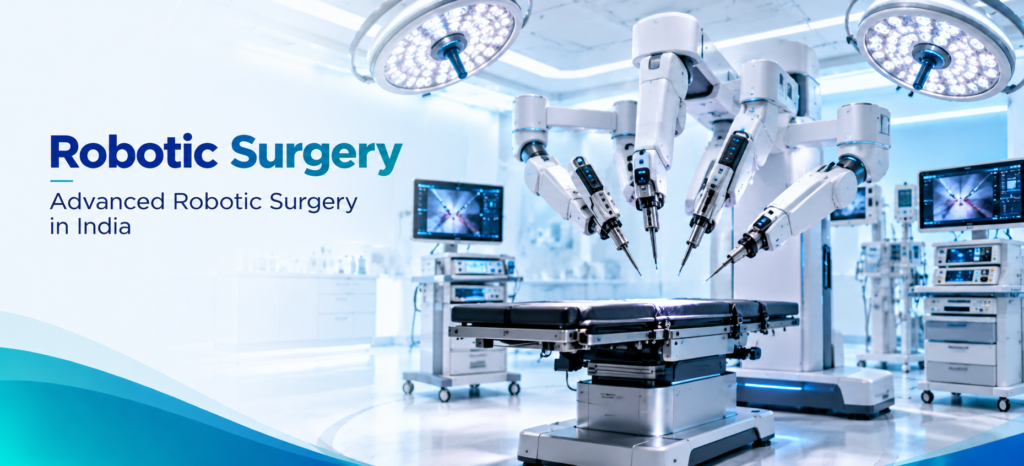
What is Robotic Surgery?
Robotic Surgery is a procedure or it is a robotic device used by experienced surgeons to treat the illness with better precision, flexibility and control than is possible with traditional procedures. The device has Robotic arms that perform the surgery holding surgical equipment in their hands. Robotic surgery is useful in performing minimally invasive surgeries with better precision and accuracy. Robotic surgery is also known as robotic assisted surgery.
Robotic Surgery is mainly divided into three parts:
- Robotic arms that work as hands of the surgeon.
- A high definition camera that deals with small details enhanced, magnified, 3D views of the surgical area.
- A surgical console is a place where the surgeon controls every move of the robotic arms. The main focus or central body of the procedure.
Robotic Surgery in India is not a replacement of the surgeons, in fact it is used as an assistant of surgeons. The robotic arms are used to perform the surgeries in complete surveillance of senior and well experienced surgeons.
Who Performs Robotic Surgeries?
Many specialists perform robot-assisted surgeries, such as:
- General surgeons.
- Colorectal surgeons.
- Gastrointestinal surgeons.
- Brain and spinal surgeons.
- Cardiothoracic surgeons.
- Gynecologic surgeons.
- Urologists.
Common Types of Robotic Surgery
Robot-assisted surgery is used for different medical treatments. Some examples include:
- Digestive system surgeries: Appendectomy, colectomy, gastric bypass and pancreatectomy.
- Gallbladder and hernia procedures: Gallbladder removal and hernia repair.
- Women’s health: Hysterectomy.
- Heart surgery: Mitral valve repair.
- Brain and nerve-related surgery: Epilepsy surgery.
- Spine-related procedures: Spine surgery.
Robotic Knee Replacement Surgery in India
Knee pain that makes stairs, walking or even sleep difficult is one of the most common reasons people consider joint replacement. Robotic knee replacement surgery is a newer way of doing it, and a growing number of hospitals in India now offer it. This section explains what it involves, who it may suit, and what the evidence really says, so you can decide with clear expectations.
What Is Robotic Knee Replacement Surgery?
The goal is the same as in any knee replacement: the surgeon removes the damaged surfaces of the joint and fits an artificial implant. The difference is in the planning and guidance. A 3D plan of your knee is created from scans or during the operation, and a robotic arm helps the surgeon cut the bone and position the implant as planned. The surgeon stays in control throughout. The robot does not operate on its own.
Who May Need It?
Surgeons may consider a knee replacement, robotic or conventional, for patients with:
- Advanced knee osteoarthritis that still causes daily pain or stiffness despite medicines, physiotherapy or injections
- Arthritis after an injury or related to rheumatoid arthritis, in selected cases
- Damage limited to one part of the knee, where a partial replacement may be an option
Your surgeon decides after examining you and reviewing your X-rays or MRI.
Robotic Surgery for Cancer in India
For many cancers, surgery is a main part of treatment. Robotic surgery for cancer in India lets surgeons remove tumours through small cuts, using robot-held instruments and a magnified 3D camera. It is one way of performing the operation. It is not a separate cancer treatment, and it is not right for every patient or every cancer.
How Does It Work?
The surgeon sits at a console next to the operating table and controls the robotic arms. The camera gives a magnified, high-definition 3D view, and the instruments bend and rotate more than a human wrist can, which helps in tight spaces such as the pelvis. The tumour, and nearby lymph nodes where needed, are removed through a few small incisions. The surgeon controls every movement.
Cancers Where Robotic Surgery May Be Used
Depending on the stage, size and location of the tumour, and on your overall health, surgeons may consider robotic surgery for:
- Prostate cancer (radical prostatectomy)
- Kidney and selected bladder cancers
- Rectal and colon cancer
- Uterine (endometrial) and selected gynaecological cancers
- Lung cancer (lobectomy)
- Certain throat and head and neck cancers (transoral robotic surgery)
- Selected oesophageal, stomach, liver and pancreatic cancers, in experienced centres
Robotic Surgery Cost in India
The cost of robotic surgery in India depends on the procedure, the hospital and your own case. Many hospitals quote roughly ₹2,00,000 to ₹5,00,000 for common robotic procedures. Simpler operations may cost less, while complex cancer or heart surgeries can cost more. Please treat this as a general guide, not a quote.
Understanding the Robotic Procedure
The procedure is all about using robotic arms to perform surgery, also it is not like a traditional or open surgery. The main focus to perform robotic surgery is how the surgeon utilised the surgical area.
Robotic Surgery is performed through minimal incisions, that’s why it has very few incisions and is known as a minimally invasive procedure. Also the surgical tool needs very less space to make their way, or get inserted for better precision. This also helps to limit the requirement to push tissue, muscle and organs aside.
Here are the steps performed during the Robotic Surgery:
- Using robotic arms, the surgeon makes one or few small cuts on the designated area.
- Insert a port (thin tube) through the incisions. The thin tube works as a way for the surgical instruments.
- The port is attached to the robotic arms and places the instrument through them.
- Holding a thin camera called (endoscope) through the same ports. The camera helps to get high 3D images for better and clear inside view.
- The surgeon completely controls the robotic arms while sitting at a console that is a few steps away from the patient.
- The robotic arms complete the surgery.
- The surgical instruments and ports are removed with care.
- Last, the incisions are closed with sutures.
Risk and Complications of Robotic Surgery
Some of the common risks include:
- At some point, the surgeon may need to change the robotic surgery to open surgery that requires a larger incision. This may happen due to severe complications or scar tissue from an earlier surgery that makes the robotic surgery difficult or impossible.
- Nerve damage and compression
- Robotic Malfunction (extremely rare)
- Robotic surgery can only be performed at centres that have specially trained surgeons.
Benefits of Robotic Surgery
- Minimally invasive
- Less pain or no pain during the surgery
- Less risk of infection
- Reduced blood loss
- Same day or next day hospital discharge
- Small scars
- Quick recovery time
- A specifically designed camera gives a high definition view of the surgical site.
- The robotic arms help the surgeons to do the complete operation inside the body with small incisions.
FAQs
Is robotic surgery an option for anyone?
No, robotic surgery isn’t an option for anyone or everyone. It depends upon the health condition of the patient, earlier surgery if it happened. It has several benefits and risks. It’s better to consult your doctor before choosing it as an option.
Is robotic surgery a safe surgical procedure?
Yes, generally robotic surgery or robotic assisted surgery is a safe option when performed under a trained and experienced surgeon. However, like every other treatment, it may have risks such as nerve damage or complications that may require open surgery.
What is the recovery time period after the robotic surgery?
Recovery completely depends on the type of surgery and the health conditions of the patient. Some patients take longer than usual to recover but many patients recover faster after the robotic surgery. Some may go home the same day or next day.
Which disease or conditions can be treated with robotic surgery?
Robotic surgery can be used to treat various cancerous tumors and several conditions that include gallbladder problems, hernias, digestive system disorders, certain heart conditions, gynaecological problems, and brain and spine conditions.
Who performs the robotic surgery procedures?
Robotic surgery is performed by trained and experienced surgeons in India, including general surgeons, colorectal surgeons, gastrointestinal surgeons, brain and spine surgeons, cardiothoracic surgeons, gynaecologists, and urologists.
How long does robotic surgery take?
The time required for robotic surgery depends on the type of operation and the patient’s condition. Some surgeries take a few hours, while others may take longer.
Is robotic surgery painful?
The patient is usually given anaesthesia during robotic surgery, so they do not feel pain during the procedure. Some pain or discomfort may occur after surgery, but it can be managed with medicines.
What is the cost of robotic surgery in India?
The cost of robotic surgery in India depends on various aspects such as the type of surgery, the hospital, the surgeon’s fees, and the patient’s medical condition. The total cost may also include hospital stay, medicines, and other tests.