
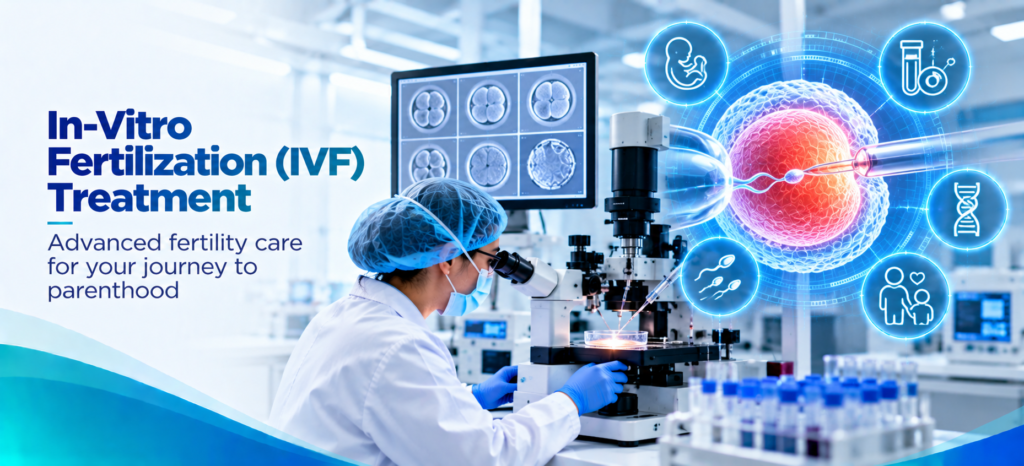
What Is IVF (In-Vitro Fertilization)?
In-Vitro Fertilization, commonly known as IVF, is a fertility treatment that helps people who have difficulty getting pregnant. Infertility can happen because of many different reasons, so doctors usually perform tests to find the cause before choosing the right treatment.
IVF treatment in India has become a popular option for couples who have been trying to conceive for a long time without success. During IVF, mature eggs are collected from the ovaries and combined with sperm in a laboratory. When an egg is fertilized, it becomes an embryo. The embryo is then transferred into the uterus, where it may implant and develop into a pregnancy.
An IVF cycle usually involves several steps and may take a few weeks. The exact time can vary from person to person depending on their health, fertility condition, and response to medicines.
IVF in Delhi and other major cities in India is available at many fertility hospitals and clinics. IVF is a type of Assisted Reproductive Technology (ART) and may use the couple’s own eggs and sperm or donor eggs or sperm in selected cases.
In-vitro fertilization (IVF) in India can help people with different fertility problems. However, IVF does not guarantee pregnancy. Factors such as age, egg quality, sperm quality, embryo quality, and the cause of infertility can affect the outcome.
IVF is also an important part of IVF Reproductive Medicine, which focuses on diagnosing and treating fertility and reproductive problems.
When Is IVF Recommended?
IVF treatment in India can be considered when a couple is facing infertility and other fertility treatments may not be suitable or successful. Depending on the cause, doctors may first recommend medicines, injections, lifestyle changes, or treatments such as IUI.
In Intrauterine Insemination (IUI), specially prepared sperm is placed directly into the uterus around the time of ovulation. When IUI or other treatments are not suitable or do not work, a fertility specialist may recommend IVF.
Some common reasons to choose IVF include:
- Damaged or Blocked Fallopian Tubes: Fallopian tubes help the egg travel from the ovary toward the uterus. If they are blocked or damaged, it can become difficult for the sperm and egg to meet naturally.
- Ovulation Disorders: Some women do not release eggs regularly or may not ovulate. This can make natural pregnancy difficult and may require fertility treatment.
- Endometriosis: Endometriosis occurs when tissue similar to the lining of the uterus grows outside the uterus. It can affect the ovaries and fallopian tubes and may make pregnancy difficult.
- Uterine Fibroids: Fibroids are non-cancerous growths in or around the uterus. Depending on their size and location, they may affect implantation or pregnancy.
- Sperm Problems: A low sperm count or problems with sperm movement, shape, or quality can make fertilization difficult. A semen analysis helps doctors identify these problems.
- Previous Surgery: People who have had tubal ligation, where the fallopian tubes are blocked or cut to prevent pregnancy, may consider IVF if they want to become pregnant later.
- Unexplained Infertility: Sometimes, fertility tests do not show a clear reason for difficulty in conceiving. This is called unexplained infertility, and IVF may be considered in selected cases.
- Genetic Issues: If one partner has a genetic condition that may be passed to the child, doctors may discuss genetic testing of embryos. Preimplantation genetic testing (PGT) may help identify certain genetic or chromosomal problems before embryo transfer.
- Fertility Preservation: Some people may preserve their fertility before treatments such as chemotherapy or radiation, which can affect fertility. Eggs or embryos can be frozen for possible future use.
Possible Risks and Side Effects of IVF
IVF can help many people achieve pregnancy, but like any medical treatment, it may have some risks. Possible IVF risks include:
- Stress and emotional pressure
- Ovarian Hyperstimulation Syndrome (OHSS)
- Risks related to egg retrieval
- Miscarriage
- Ectopic pregnancy
- Multiple pregnancy
- Premature delivery
- Low birth weight
The level of risk can vary from person to person. A fertility specialist can explain the possible benefits and risks before treatment begins.
Tests to Expect Before Starting IVF
Before starting IVF treatment, the fertility specialist may recommend tests for both partners. These tests help doctors understand the cause of infertility and plan the treatment.
Ovarian Reserve Testing:
Blood tests and ultrasound may be used to understand the available egg supply and assess ovarian reserve.
Semen Analysis:
A semen sample is examined to check sperm count, movement, and shape. This helps identify possible male fertility problems.
Infectious Disease Screening:
Both partners may be tested for certain infections, including HIV and other infectious diseases, before fertility treatment.
Embryo Transfer Practice:
In some cases, doctors may perform a practice embryo transfer without using an actual embryo. This helps them understand the position and depth of the uterus before the actual transfer.
Uterine Examination:
The uterus and its lining may be examined before IVF. Sonohysterography is one method in which fluid is placed inside the uterus through the cervix to produce clearer images of the uterine cavity.
The tests required may differ depending on the patient’s medical history and fertility condition.
Why Consider India for IVF Treatment?
India is considered by many patients for IVF treatment in India because it offers experienced fertility specialists, modern medical facilities, and comparatively affordable treatment options.
Some reasons to consider India for IVF include:
- Affordable IVF Treatment for International Patients: Many fertility centres offer treatment and support services for international patients.
- Experienced Fertility Specialists: India has many trained specialists working in reproductive medicine and assisted reproductive technology.
- Accredited Hospitals and Centres: Several hospitals and healthcare facilities have accreditations such as NABH, NABL, or JCI, depending on the centre.
- Advanced Technology: Modern fertility clinics use advanced equipment and laboratory facilities for IVF and other fertility treatments.
- Complete Fertility Care: Many centres provide consultation, fertility testing, treatment, laboratory services, and follow-up care.
- IVF Fertility Clinics in India: Major cities have fertility clinics offering IVF, IUI, fertility preservation, and other reproductive treatments.
- International Patient Support: Some hospitals provide visa assistance, accommodation support, interpreters, and airport transportation.
- Post-Treatment Care: Patients may receive follow-up consultations and medical support after treatment.
For people searching for the Best Fertility Treatment in India, it is important to understand that there is no single treatment that works best for everyone. The right treatment depends on age, medical history, fertility diagnosis, and egg and sperm health.
FAQs
What is IVF treatment?
IVF is a fertility treatment in which eggs are collected from the ovaries and fertilized with sperm in a laboratory. The resulting embryo may then be transferred into the uterus.
Who may need IVF?
IVF may be recommended for people with blocked fallopian tubes, ovulation problems, endometriosis, certain sperm problems, unexplained infertility, genetic concerns, or unsuccessful previous fertility treatments.
Is IVF successful for everyone?
No. IVF does not guarantee pregnancy. The IVF success rate can depend on age, egg and sperm quality, embryo quality, cause of infertility, and overall health.
Is IVF available for international patients in India?
Yes, Many fertility hospitals and IVF clinics in India provide treatment for international patients. Some also offer services such as accommodation assistance, visa support, interpreters, and airport transportation.
How can I choose the best IVF clinic in India?
Consider the experience of the fertility specialist, laboratory facilities, available treatments, accreditation, treatment costs, and follow-up care. A consultation with a qualified reproductive medicine specialist can help you understand your options.